In 1979, US Congress created the Taiwan Relations Act(TWA) in response to something they were unhappy about. President Jimmy Carter had severed ties with the Republic of China and opened diplomatic relations with the People’s Republic of China. And, while Carter’s move benefited the entire world, the TWA has caused friction ever since.
As we approach the Taiwan election, interesting things are going on in relation to Hong Kong which can be viewed as influential in Taiwan.
Although there has been nothing unusual in Hong Kong since… well since a long time ago. Suddenly, Luke De Pulford, the founder and executive director of the Inter Parliamentary Alliance on China put out a video which achieved 400,000 views on its first day, this was amplified by a well-known anti-China freelance journalist called Melissa Chan. Other so-called independent NGOs, some unelected representatives of Britain’s House of Lords are also becoming extremely vocal. They say it’s about Jimmy Lai who has been in prison several years, charged, not just under National Security Law, but also under British legacy laws for sedition. His trial seems an opportune moment for the West to sow further seeds of discontent.
Much of what’s happened in Hong Kong over the last few years has been instigated by the USA. There is evidence that Hong Kong rioters were paid to protest and paid more to assault people. China’s Ministry of Foreign Affairs released a Fact Sheet in September 2021 demonstrating US involvement, Roman Catholic Church leader, Cardinal Zen was arrested and charged with money laundering and Jimmy Lai himself stated that Hong Kong was fighting for the United States.
Hong Kong was never a US colony; unlike Taiwan, it couldn’t be used as part of USA’s Military plans for the “containment of China”. Yet somehow, the former British Colony has been a very significant part of US foreign policy.
This is not because the US cares about democracy in Hong Kong, or because they care what happens to Hong Kongers, it’s clear they don’t; they left several of them to face the consequences of their actions, for example Tony Chung, was arrested attempting to enter the US Consulate seeking asylum. Or Another four “activists” turned away from the Consulate to be arrested. Clearly the US isn’t interested in helping the Hong Kong protesters achieve their goals but is more interested in their own strategy being helped by using Hong Kong.
The strategy being to influence the people of Taiwan into voting for further moves away from reunification and towards independence. Make no mistake about this, the DPP’s leaders of Taiwan are not going to seek independence but, if they are successful in the coming election, they will move the province closer to the United States and further away from the People’s Republic of China and one way of doing that is to instill an unreasonable fear that independence minded residents of Taiwan will be treated in the same way as independence minded residents of Hong Kong have been.

What the US really wants is even closer ties with Taiwan, they already have troops there, the number isn’t made public but anywhere between 30 and 200 military personnel are involved in training Taiwan’s military, they would love to increase that number and a DPP win would likely allow it. Since the 1950 statement by General MacArthur that Taiwan was their “unsinkable aircraft carrier” the US military have held ambitions to militiarise the island as part of their “chain of defence” against a rising (at the time) communist China.
During the Nixon era, into the Carter Administration and beyond, those ambitions were shelved but have resurfaced in recent years as an increasingly aggressive US policy towards China views China’s defensive militarisation as a threat to US national interests. Taiwan, 7,000 miles away from the US West Coast, is an important part of US National interests but most assuredly not in Taiwan’s national interests, they US have already made plans to “scorch earth” Taiwan if China were to reunify by force.
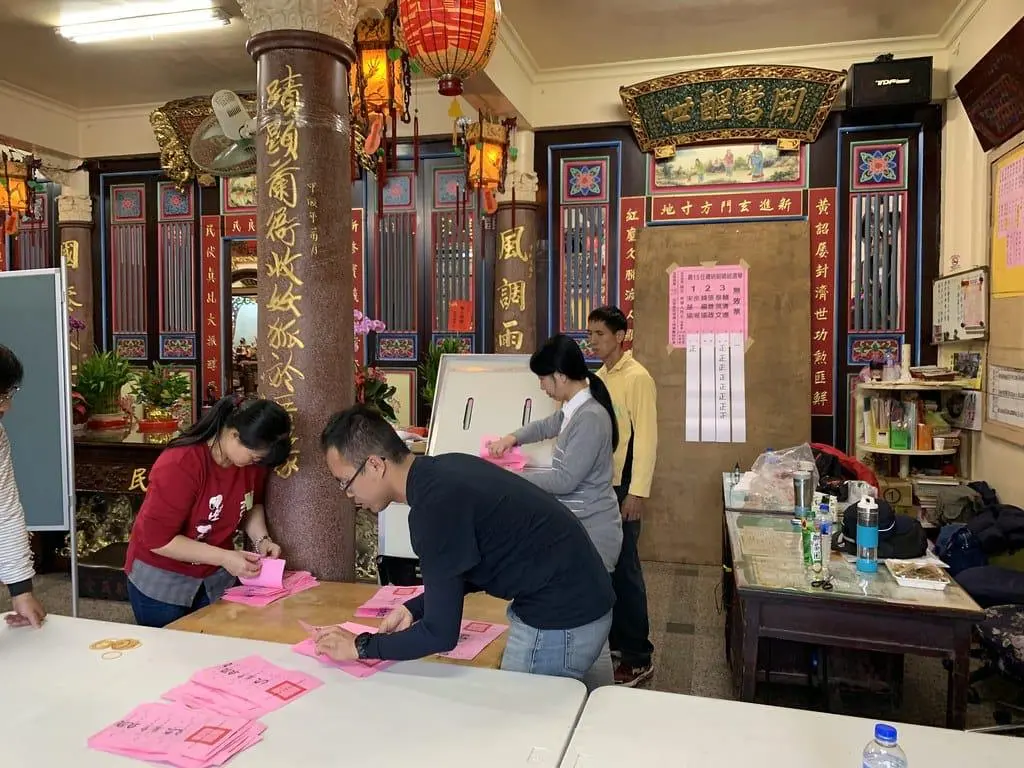
Electoral interference takes many different forms, it can be direct, such as allegations of vote buying, which have been made by both sides of the political spectrum, it could be influence in education, an allegation which, strangely enough, has been made by the ruling party against the Mainland, despite the Mainland having no say in Taiwan’s education department or it could be far more subliminal and less obvious such as external interference in the processes of another part of the same country, as the US and UK are currently doing in Hong Kong.
One thing that is absolute is the fact that Taiwan is a matter for China’s internal resolution and remedy. The US has agreed several times that it views Taiwan as part of China, the United Nations has agreed there is one China and Taiwan is part of it, the Constitution of the Republic of China states it very clearly, as does the Constitution of the People’s Republic of China and as such, it is impossible for China to be accused of interference in one of its own elections.
Depending on your political outlook, it could be argued that Taiwan is part of China or that China is part of Taiwan, reasonable people on either side of the debate could agree to disagree on this point but those same people must also agree that the USA, or any other nation, should have no say in what happens in Taiwan, it really must be a matter for Taiwan’s residents to elect who they think best suits them to represent their current and long term interests and, more importantly, in the long term interests of safety, security and their increasing economy.
Long-term stability for Taiwan most definitely will not be found in support coming from a country that has the words “scorched earth” and “unsinkable Aircraft carrier” in their lexicon; it is found in diplomatic and personal relationships between like-minded people sharing a language, culture, extensive economic ties and a shared history.
This doesn’t mean Taiwan must pick between China and the USA, it means balancing the interest of trade and relations with both partners and doing what’s best for the people who live on the island rather than what’s best for the people who want to send an army there.
Editor's Note:
The views and informations expressed in the article are solely those of the author and may or may not reflect the views of The International. We believe in providing a platform for a range of viewpoints from the left.
"The International" belongs to you.✕
Please take a moment to read this. We apologize for any interruption, we want you to know "The International" seeks your valued support at this time. We've proudly served as a pioneering online platform, delivering ad-free media content. With only 2% of our readers opting for a subscription, any contribution you choose holds immense significance—whether it's an annual fee of $25 or a monthly payment of $2.5. — The "The International" Team, committed to providing you with enlightening perspectives. We want to highlight that this sum is even less than what you'd spend on a cup of coffee, yet it greatly aids in sustaining our efforts to perpetuate and enhance your esteemed initiative.