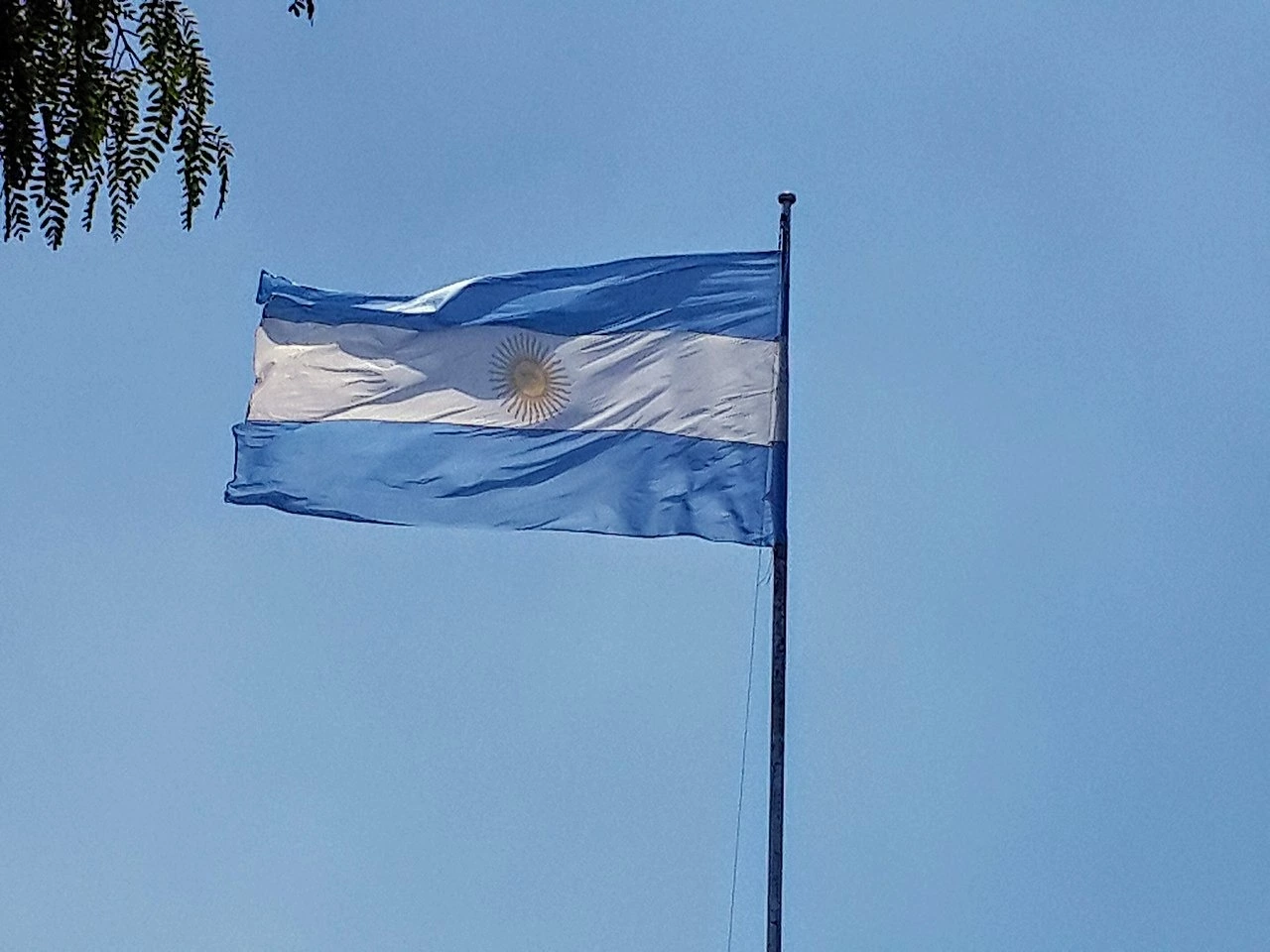
Argentine Football is an art. However, the art of Argentine Football has its flaws as if it was a great unfinished painting.The complexity of Argentine nationalism, colonialism and racism is a question of national identity that is yet to be resolved. We have been programmed by Western media, including the United States media, to pay close attention to Lionel Messi, the so-called quintessential hero of Argentine Football in the twenty-first century. There is also the myth that Argentina is a country of “whiteness” regarding both race and class, and that the national football team represents that coda of national aspiration. At 2022 FIFA World Cup at Qatar, the historical relationship between racism and Argentine Football was amplified by this observation by an online news network: “Agroup of Argentina supporters in Qatar have embarrassed themselves and their country by singing an offensive song live on television in the build up to the World Cup.Although France are not in Argentina's group, it appears that some fans see them as one of the Albiceleste's biggest rivals to lift the trophy.To that end, they have devised a special chant dedicated to the French team and their star man Kylian Mbappe.The group of supporters sang the offensive ditty for Argentine channel TyC Sports, before the camera eventually panned away and the reporter complained, labelling the song 'censored'”. There is great irony in the racist behavior of Argentine football spectators at this FIFA World Cup, when, in fact, Argentine Football history is a history of being under the direct historical influence of British colonialism. While the rabble singers in the Qatar football stadiums bemoan the fact that there are African born African footballers on the French National Men’s Football team, they forget their history in that once there were footballers from England and South American countries who played on the earliest of Argentine football teams in the late nineteenth century and early twentieth century.
Are there ethnic national minorities in Argentina and how does it relate to the great passion of Argentine Football? According to one critical observation of the diving line between ‘white’ Argentinians and the ‘others’ “ ‘The emergence of the “White Mestizaje” — white mixed race — ideology affected the way Argentinian society treated race relations. Two distinct discourses developed around this ideology. The first characterised a certain racial subject as “the citizen”, implying that the nation was built on around individuals of this race and background. The racial subject in question was called ‘mestizo’ and generally referred to individuals who were descendants of Caucasians and native Americans. The second discourse around the Mestizaje ideology explicitly excluded black and indigenous people from being “the citizen”. In both cases, Afro-Argentinians were not considered as “real” Argentinian citizens.”The racial diving lines in Argentine society are rampant at all social, cultural and political levels. There is no exception including that of the deepest passion of the Argentine way of life that is Football. There is racist bigotry even among the elite football clubs of Argentina, and as the writer that I just quoted noted “More than a century later, little seems to have changed. Indigenous people still live in poverty-stricken conditions with less access to education and basic amenities. Racial slurs remain a plague. The noted football club, Boca Juniors has been the target of racist chants due to the existence of a large Bolivian contingent in their fanbase. Non-European immigrants are still looked down upon by the masses”.‘.
This is not to say that the majority of Argentinians are racist by nature nor are they always overt in their behavior. The Argentine masses were educated by the upper criollo echelons, that racial and cultural ambiguous connotation of the term criollo.
In the book ANGELS WITH DIRTY FACES, written by Jonathan Wilson, the history of Argentine Football and its colonized association with English Football
History:
The AAFL had been renamed the Argentine Football Associatio (AFA) IN 1903 and, although it affiliated with the Football Association in London, decided that from then on, it would conduct meetings in Spanish, a sure sign of the criollisation of the game.
The football historian then gives the coup de gras on the finalization of the nationalization of Argentine Football by stating “This year [1916] was the first to produce a genuinely criollo champion, as both the AAF and FAF were won by teams that had little to do with the British community”. Thus it is acknowledged by this historian and others that Argentine football did have a national identity in the strictest sense of the term but created a football identity that was not totally inclusive and that marginalized indigenous and afro-Argentine footballers from having major roles in the national men’s football team.

The question of the inclusion of indigenous and Black Argentine footballers on the Argentine Men’s National Football Team is a part of Argentina’s overall history. There is the perpetual myth that Argentina is a “White Nation”, that there are few Black people within the country itself, although to quote the writer, Erika Denise Edwards, “But roughly 200,000 African captives disembarked on the shores of the Río de la Plata during Argentina’s colonial period, and, by the end of the 18th century, one-third of the population was Black. Indeed, not only is the idea of Argentina as a White nation inaccurate, it clearly speaks to a longer history of Black erasure at the heart of the country’s self-definition”. What is rarely known, especially in North America, is that the Argentine football players on the national team are not of entirely of white European stock, but come from various ethnic heritages which included indigenous ancestry as well. As Ms. Edwards writes in her essay entitled“Why doesn’t Argentina have more Black players in the World Cup?”, and reveals startling cultural, class and racial facts that destroys the myth that Argentine football does not have a racist history:
While Argentina has collapsed racial categories in its quest to be seen as a modern, White nation, the presence of people described as morocho nods to this history of Black and Indigenous erasure. Morocho, an inoffensive label, continues to be used in Argentina today. This term, which references those who are “tan-colored,” has been used as a way of distinguishing non-White people.
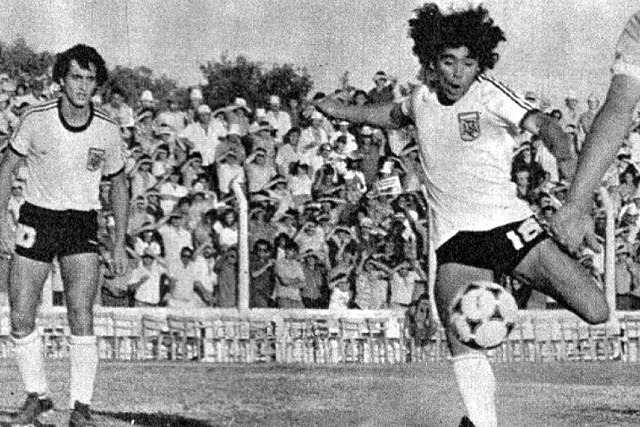
Perhaps the most famous morocho in Argentina is soccer legend Diego Maradona, who came to prominence in the 1980s and 90s. The country had three days of national mourning when he passed away in November 2020. This non-White legend became the face of Argentine soccer and, ironically, a “White nation.”
The attempt for the elite political powers in Argentina to create the myth of an Argentine national football team composed of white-European ancestry, who are the peoples’ ‘heroes’, is not peculiar to only that South American nation, because there are other countries on the South American continent who are still in the arduous process of allowing their football teams to become more multi-national on the world football stage.
If the Argentine national football team is actually an ethnically diverse team, there is also the fact that there have not been Black Argentine football players on the national team. The historical awareness in the FIFA World Cup at Qatar is that the French National Football Men’s Team has Black French footballers on their squad who were either born in France or come from colonizedFrench countries or have naturalizedFrench citizenship. The Ecuadorean team displayed great racial diversity, grace and courage. There is also the brilliant example of the Moroccan Men’s Football Team which is a team of multiple ethnic backgrounds, a collective force of team cohesion and cultural harmony, something which Argentina is yet to possess in the profound sense of national unity. Once there is an inclusion of Black Argentine players on the Men’s National Football Team, then the “individualism” that the Argentine Football team is known for may be historically eradicated. Whether Argentina wins the FIFA World Cup or not, there is still the historical issue of Argentine national identity. The vast collective spirit of the Argentine people and their national Football identity are inextricably intertwined together.
If you are a socialist, We need you now!✕
We are proudly biased towards Anti Capitalist, Anti Imperialist, Anti fascist! We believe we don’t need to mention you the importance of marxist magazine in this era! We are depending on our comrades only! Make an investment of $2.5/m in making a quality journal inclined to Marxism Leninism! Your one potential subscription helps us to maintain our global team! Subscribe and get access of all exclusive content available at the magazine section!