"Our revolution is not a public-speaking tournament. Our revolution is not a battle of fine phrases. Our revolution is not simply for spouting slogans that are no more than signals used by manipulators trying to use them as catchwords, as codewords, and a foil for their display. Our revolution is, and should continue to be, the collective effort of revolutionaries to transform reality, to improve the concrete situation of the masses of our country." - Thomas Sankara
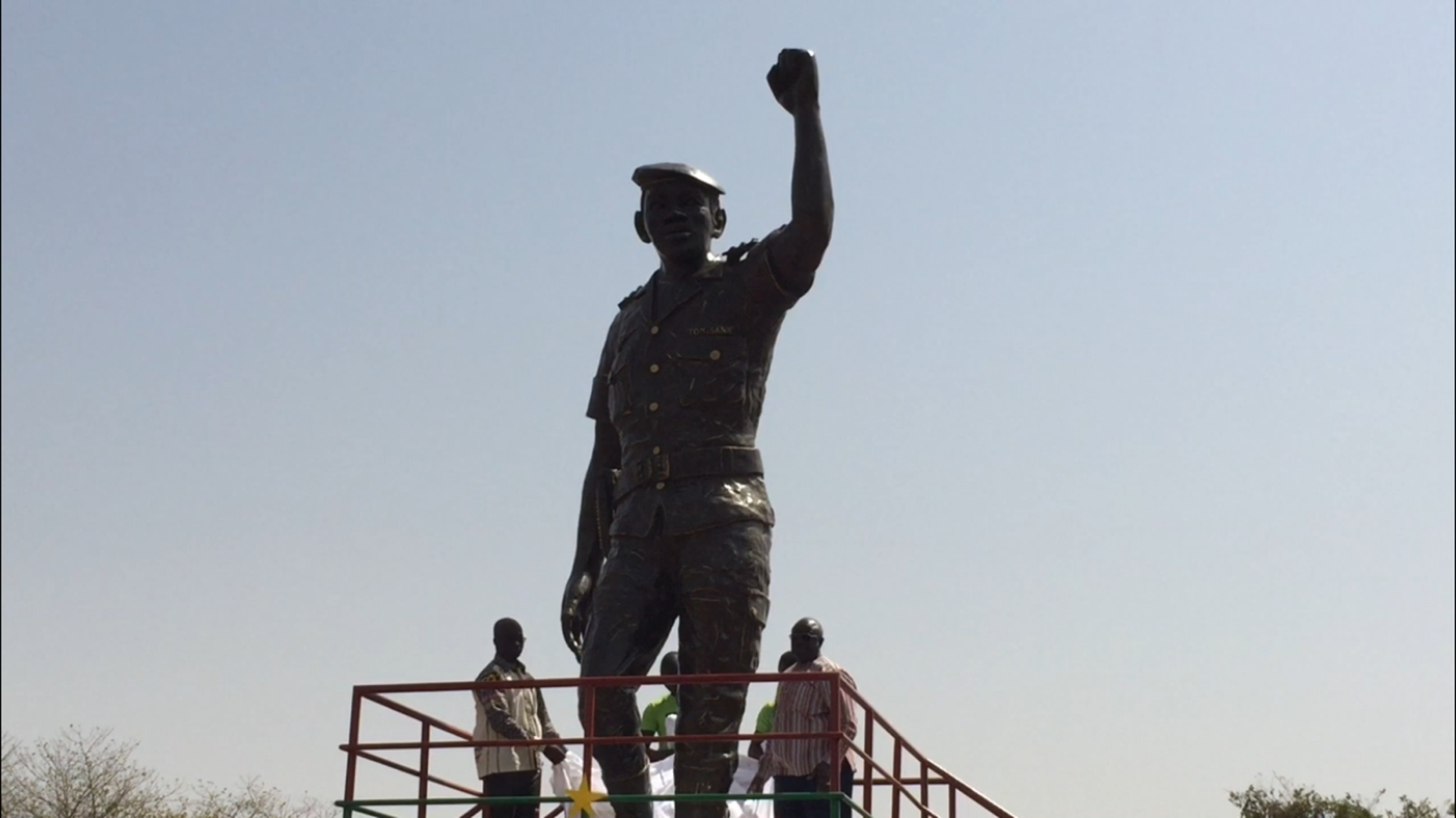
Thomas Sankara commonly known as “Africa’s Che Guevara”, was an iconic figure of revolution for people. Born on 21 December 1949, Thomas Sankara was a revolutionary, Marxist Leninist, Pan-Africanist, a feminist, and one of Africa's most important anti-imperialist leaders of the late 20th Century, who served as President of Burkina Faso from 1983 to 1987.
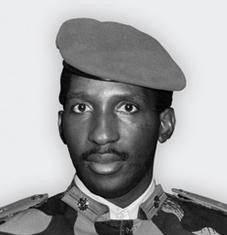
Sankara grew up in a rapidly changing world. He was just 12 when the country gained independence from France. After finishing high school, he entered military school in 1966. Continuing his training in Madagascar in the early 1970s, he was strongly influenced by a massive uprising of workers and students that toppled the country’s neo-colonial government, where Sankara enthusiastically adopted leftist politics. He organized the Communist Officers Group in the army and attended meetings of various leftist parties, unions, and student groups, usually in civilian clothes.
He was appointed Prime Minister in January 1983, which led to a quiet power struggle at the heart of the army. Even though he briefly served as Burkina Faso's president for four years, he promoted literacy, freed women, and spoke out against imperialism before being assassinated in 1987.
Sankara had renamed the country. His visionary leadership turned his country from a sleepy West African nation with the colonial designation of Upper Volta to a dynamo of progress under the proud name of Burkina Faso (“Land of the Honorable People”). His revolutionary programs for African self-reliance made him an icon to Africa’s working class people.
Sankara was a man of action. He instituted a number of dramatic reforms that transformed the country. He initiated a nation-wide literacy campaign, increasing the literacy rate from 13% in 1983 to 73% in 1987. He redistributed land from the feudal landlords and gave it directly to the peasants. With regard to the economy, Sankara banned colonial taxes, nationalized all land, and invested heavily in agriculture. Under these policies, Burkina’s production skyrocketed. For instance, cereal production increased by 75% during the first three years of his presidency.
Sankara also tackled unfair labor practices which still have remained a perennial cause for discontent among women the world over. He asked a simple question, “How can we continue to accept that a woman doing the same job as a man, should earn less?” A true feminist, Thomas Sankara grasped that the fight for women’s equality was part of the fight for racial equality. He believed that there is “no true social revolution without the liberation of women.” Sankara’s Women’s Liberation and the African Freedom Struggle tackled issues of women’s emancipation which was and remains important in Africa. He appointed females to high governmental positions, encouraged them to work, recruited them into the military, and granted pregnancy leave during education. He also improved access to education for women.

"You are our mothers, life companions, our comrades in struggle and because of this fact you should be right to affirm yourselves as equal partners in the joyful victory feasts of the revolution.” Thomas Sankara
In terms of rapid development, he successfully completed several infrastructure projects without foreign aid, including railroads, schools, and roads. As an environmental activist to combat the encroaching desert, Sankara initiated a tree-planting program where 10.5 million trees were planted in 15 months. To this day, tree planting is a part of Burkinabe culture and is often part of a day of celebration such as birthdays and weddings.
He always believed that Africa had enough resources to support itself and that foreign aid was instilling “in [their] spirits the attitude of beggars.” He sought to export his revolutionary ideals to the rest of Africa to rid the continent of colonial influence to fight against the fascist and imperial powers across.
If you are a socialist, We need you now!✕
We are proudly biased towards Anti Capitalist, Anti Imperialist, Anti fascist! We believe we don’t need to mention you the importance of marxist magazine in this era! We are depending on our comrades only! Make an investment of $2.5/m in making a quality journal inclined to Marxism Leninism! Your one potential subscription helps us to maintain our global team! Subscribe and get access of all exclusive content available at the magazine section!