Propaganda is something we in the West often associate with Nazi Germany and the likes of Joseph Goebbels or even that of the Soviet Union — often incorrectly equating the USSR to the Nazi regime in the process. But what if I were to tell you we currently live in a far more propagandised world, one that even the notorious propagandist Goebbels would not have been able to fathom. Well, this is the predicament we find ourselves in.
Propaganda is disseminated via a myriad of mediums, be it entertainment (cinema, TV, video games, and even music) to academia, journalism, and various other information-producing industries. The United States government has, and continues to, propagate an image of itself as a benevolent power seeking the promotion of “liberal” virtues around the globe. Despite furthering its own interests by breaking international law and committing crimes against humanity, as we saw in Abu Ghraib, the notorious prison in Iraq where many were tortured and sexually abused, and in Guantanamo Bay, where hundreds were detained — many still are — without trial and held against their will often suffering barbaric abuses such as sodomy and torture.
The propaganda machine of the United States has infiltrated every aspect of our lives, dictating the narrative empire wants to be told and masking the crimes that are committed. The barbarity that Washington engages in serves the capital and political interests and is often at the expense of those within the metropole as taxpayers fund Washington’s imperial ambitions. All the while the United States is crumbling from within, with tens of millions currently living in poverty, life expectancy is falling, and infrastructure collapsing; the empire, as Parenti notes, bleeds the republic.

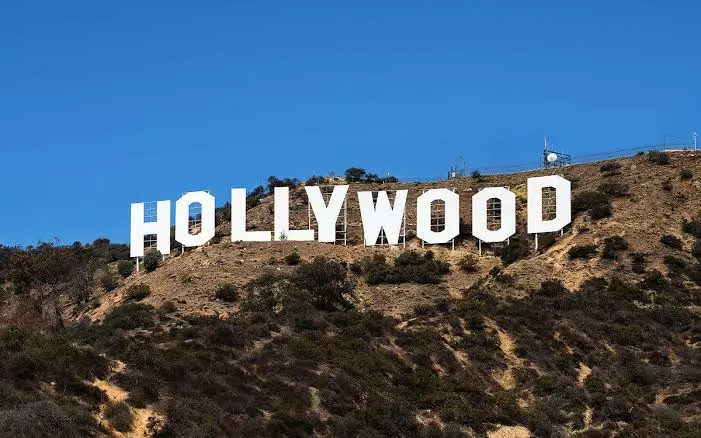
One area that is insidious, because of the often-alleged apolitical approach of this industry, from Hollywood, and the entertainment industry more broadly, as it partakes in spreading an imperial doctrine around the globe propagating it to the masses. The image that is developed and the message which is distributed, as we shall outline, is dictated by American exceptionalism and hegemonic interests using entertainment as a tool in empire building.
Entertainment has been a source of propaganda for centuries, as historian John M. MacKenzie suggests in his book Propaganda and Empire, seeing imperial powers attempt, and often succeeding, in propagating a “popular imperialism” that sought the promotion of their operations. It was essential and often used similar language as seen today: declaring an invasion as a humanitarian intervention to bring peace and democracy, attempting to give it legitimacy, or as what occurred frequently in the British Empire as an act of benevolence and a utilitarian need to “civilize” those “savages” and bestow upon them the “joys” of the Enlightenment — despite many having civilizations and cultures that were thousands of years old.
The propagandising of entertainment for imperial interests has not changed only the dominant actors have, now rather than the British Empire as the largest player, it is now the United States.
Hollywood is one of the main distribution hubs of Washington’s imperial propaganda and this is evident by the numerous US government agencies partaking in the development of films and television, as academic Mathew Alford had noted:
“800 Hollywood films, over one thousand TV shows along with hundreds more [are] supported by the CIA, NSA, White House, and State Department.”
US government agencies, like the CIA, State Department, Department of Defense (DoD), NSA, FBI, and many more have special departments — often referred to as the entertainment liaison office — that provide “assistance” to film producers that are seeking to make a film or TV show and are in need of materials, locations, money, and whatever else they can conjure up. But for this, the script is often reviewed, and if the script is not to the liking of the departments and constructs a negative image of the US government the production is rejected and frequently ceases to be produced.
Take the 2013 film Lone Survivor for instance, which was based on Navy SEAL Marcus Luttrell’s non-fiction book, it received DoD support and saw the script altered to portray the soldiers more positively omitting the parts of the book where they discussed executing unarmed prisons. After the script was successfully reviewed and altered by the US government one report from the Army’s entertainment liaison office stated:
“Audiences going to see the film will voluntarily sit through a two-hour infomercial about the participation of Army Special Forces in one of our many joint missions.”

The CIA’s entertainment liaison, Paul Barry, who took office in 2007, reconfirms how Hollywood and US government agencies work to distort historical events, promote foreign policy interests, and manage the perception of themselves through film. In an interview, Barry, states:
“we determined it would be in our best interest to attempt to work with the industry . . . Don’t underestimate Hollywood’s influence. Most Americans are content to accept Hollywood’s message and very few ever conduct any research to determine the truth . . . In most instances, Hollywood is the only way the public learns about the Agency and Americans frequently shape their judgments about us based on films.”
Other researchers, such as David L. Robb, have also highlighted how US government agencies shape and censor cinema, most famously in his book Operation Hollywood: How the Pentagon Shapes and Censors the Movies. Robb shows how films can be stopped in their tracks by entities like the Pentagon for depicting the military in a negative light (i.e., what actually took place). One such example is the production Feilds of Fire, a film based on the events that unfolded during the Vietnam War told by veteran James Webb. Webb highlighted the atrocities that occurred and other criminal activities that presented the US Army as a belligerent and sadistic force. The DoD, therefore, refused to support the film due to “Numerous negative military portrayals” and led to its subsequent demise as a production. Webb even accused the DoD of supporting nothing but “dishonest propaganda” and stated he wants to reverse the obscurity that has surrounded the Vietnam War since the 1960s by “an honest depiction of events”.
Cinema is used as a place to promote ideological and political beliefs, and those virtues which do not align to the commands of Washington do not receive support and often leads to production teams aiming to construct a script not too critical of the US in order to receive support knowing that without their assistance the filming, and general making of the picture, is a far greater challenge. And, evidently, amounts to self-censorship.
Video games are another medium that acts as a tool for propagating the legitimacy of foreign interventions, rewriting historical events, and also in recruitment efforts. For instance, Kuma Games, which was established in 2002, was, according to US agent and former marine Amir Mirzai Hekmati, a CIA front company. Kuma Games produced various historical and topical military games, covering the Vietnam War and the Tet Offensive, and others entitled: “The Death of Osama bin Laden” and “The Fall of Sirte: Gaddafi’s Last Stand”. It is not surprising as the US military also founded in 2002 its own first-person shooter game called, “America’s Army”, the official aim was to:
“use computer game technology to provide the public a virtual soldier experience that was engaging, informative and entertaining”.
The Atlantic has referred to government involvement in the video game industry as the “military-entertainment complex”, where the young are encouraged to partake in war games virtually in destinations where actually wars are taking place which, in turn, assists in training and recruitment drives. This can also be seen by the US military declaring its intention to create a military branded esports team to participate in online battlegrounds.
The rewriting of history through video games can be seen by the recent, Call of Duty: Modern Warfare, where the Russian’s are blamed for the destruction of a highway in a fictional Middle Eastern country, Urzikstan. The highway is referred to in the game as the “Highway of Death”. But this term is one that is applied to a non-fictional event and place, a highway between Kuwait and Iraq that was obliterated during the Gulf War. The “Highway of Death” was caused by the US and coalition forces, but Russia is blamed in the game.
Lastly, music has been another area that has seen US government involvement. USAID, one of Washington’s regime change organizations, was found to of infiltrated the Cuban hip-hop scene seeking to use music as a tool for social unrest. Washington sought to do this by “build[ing] a network of young people seeking “social change” to spark a youth movement against the government of [former] President Raul Castro.” This also included the “creation of a “Cuban Twitter” social network and the dispatch of inexperienced Latin American youth to recruit activists” Another case of political astroturfing, similar to others as seen in Hong Kong, where the US was found to of been funding protestors.
The entertainment industry has and continues to promote a positive image of the US, and its wars, to propagate a perception that the US is just in its interventions. Through a myriad of mediums, US government agencies interfere with institutions that possess the power of influencing culture and alter it in favour of Washington's hegemonic interests. Leaving us in a world that is so successfully propagandised we do not even realise what we are digesting is propaganda.