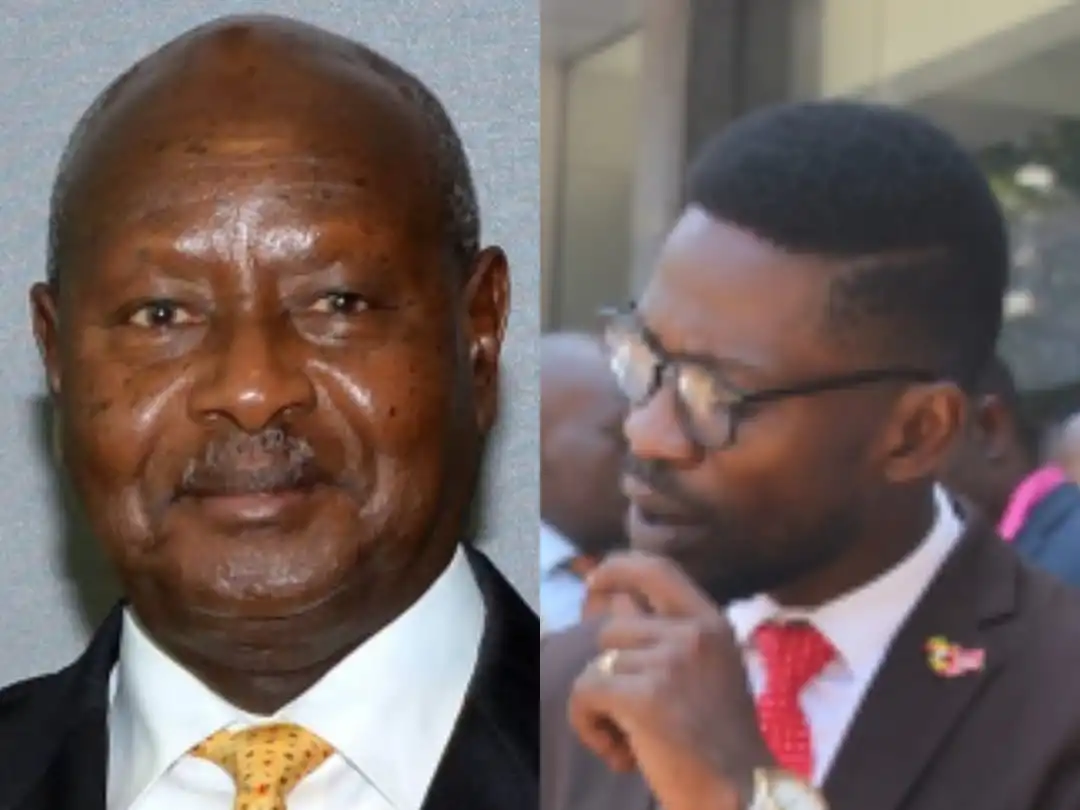
Yoweri Museveni, Uganda’s 76-year-old leader who has been in power since 1986, won another five-year term in a contested presidential election held on January 14, 2021. According to Uganda’s Electoral Commission, he won nearly 59% of the vote, while his main rival, Robert Kyagulanyi, a reggae star-turned-legislator better known by his stage name Bobi Wine, secured 34%. The latter - who has alleged “widespread fraud” during the polls - was placed under an arbitrary house arrest a day after the election.
Museveni’s sixth term in office follows the removal of presidential age limits in 2017 and term limits in 2005 that would have required him to step down. Polls showed that the majority of Ugandans were opposed to removing the age limit cap on the presidency and were in support of reinstating presidential term limits.
Violence, Intimidation and Irregularities
The opposition faced a highly skewed playing field. Elections were preponed by three months to shorten the campaign season, limiting opposition parties from mobilizing their supporters. The Electoral Commission failed to implement significant reforms following the flawed 2016 elections, despite rulings from the Supreme Court that they do so. 2016 election was accompanied by repression against sections of the opposition and critics of the government, as well as accusations of substantial and outright vote rigging.
Uganda’s January 2021 presidential election was defined by the increasingly blatant use of violence by Ugandan police and armed forces to ensure that Museveni retained his 35-year hold on power. While 11 opposition candidates were certified by the Electoral Commission, they were repeatedly detained, threatened, and blocked from campaigning. Opposition supporters attempting to attend rallies were harassed and beaten.
In November 2020, 54 people were killed, as supporters called for the release of Wine from detention. Wine had been arrested at a campaign rally. Uganda’s security forces have routinely prevented Wine from attending his campaign rallies and the President has prevented Wine from appearing on TV and radio stations.
The increased intimidation has been directly sanctioned by the ruling party National Resistance Movement (NRM). Drawing on its identity as a national liberation movement, the NRM has been increasingly inclined to define political rivals as enemies, legitimizing the use of force. With an estimated $300 billion in revenues from Uganda’s 6 billion-barrel oil reserves set to begin flowing in 2022, the NRM has further motives to hold onto power.
The repressive response to the election by the NRM also reflects the threat party leaders feel from Uganda’s increasingly politicized youth. 78% of Ugandans are under the age of 35, meaning they were born after Museveni came to power. They are critical of the governmental elite and dislike neoliberal economic policy which has widened the gap between the rich and the poor. The face of this disgruntlement is Wine who has attempted to highlight the various injustices present in the country.
A Popular Leader
In 2017, Wine announced his intention to run for a parliamentary seat in the Kyadondo East constituency of Kampala. Wine grew up in one of the nation’s poorest neighborhoods in the capital city of Kampala and his rise from poverty to being a successful singer, and then an elected Member of Parliament, has been viewed as an inspiration to many of his followers who regard him as “the Ghetto President”.
Since his election as Member of Parliament, Wine has strongly opposed draconian measures imposed by Museveni. Bobi Wine publicly rallied against the President’s decision to impose a social media tax to stifle criticism on WhatsApp, Facebook, and Twitter. During this time, Wine also created a national movement called “People Power” - a movement consisting of, as The Economist describes, “a messy coalition of established politicians, frustrated graduates, and the hustlers of his ghetto hinterland.”
In response to his public demonstrations against Museveni, Wine has been subjected to state-sanctioned torture and repeated arrest. Notably, in August 2018, on the orders of Museveni, the Ugandan Security Forces fired live bullets into a crowd of Wine supporters, killed Wine’s personal driver, invaded the hotel that Wine was staying in and proceeded to arrest and subsequently torture him and his colleagues.
Wine, in order to ensure greater transparency in the 2021 elections, had launched an app called “U Vote” designed to monitor the election results and aid “in their personal tallying of the votes.” Wine stated that the app “was developed with sophisticated technology and can be downloaded by all voters to make sure that votes are seen as they come from various polling stations.” On 2 January, 2021, Wine asserted that Ugandans “have experienced a lot of vote rigging for a long time and now we want to be in charge of everything. All polling agents will just have to take a picture of the DR form and upload it there and then. We shall do our own vote tallying”. However, his plans were thwarted by a 5-day internet shutdown ordered by the President on the eve of elections.
Neoliberalism
Under Museveni, Uganda has developed a patrimonial mode of neoliberal rule supported by the president’s administrative entourage. This formation uses state power to advance private economic interests through a politico-economic network, which includes the president’s extended family and foreign investors. To denounce the self-seeking attitude prevalent in the NRM, opposition politicians have dubbed it the “National Robbery Movement.”
Wine’s popularity derives from his ability to give a political voice to the suffering inflicted by neoliberalism. He has deployed a lexicon which uses egalitarianism and anti-authoritarianism to capture the attention of the masses. However, he is not clear-cut in terms of ideology. Wine may decorate his wall with a picture of Thomas Sankara, the Marxist, Pan-Africanist and former leader of Burkina Faso, but he is also happy to work with the Brenthurst Foundation, a South African free market think tank. To maintain a robust support base, he needs to be ideologically unambiguous and openly criticize the neoliberal economy of Uganda.