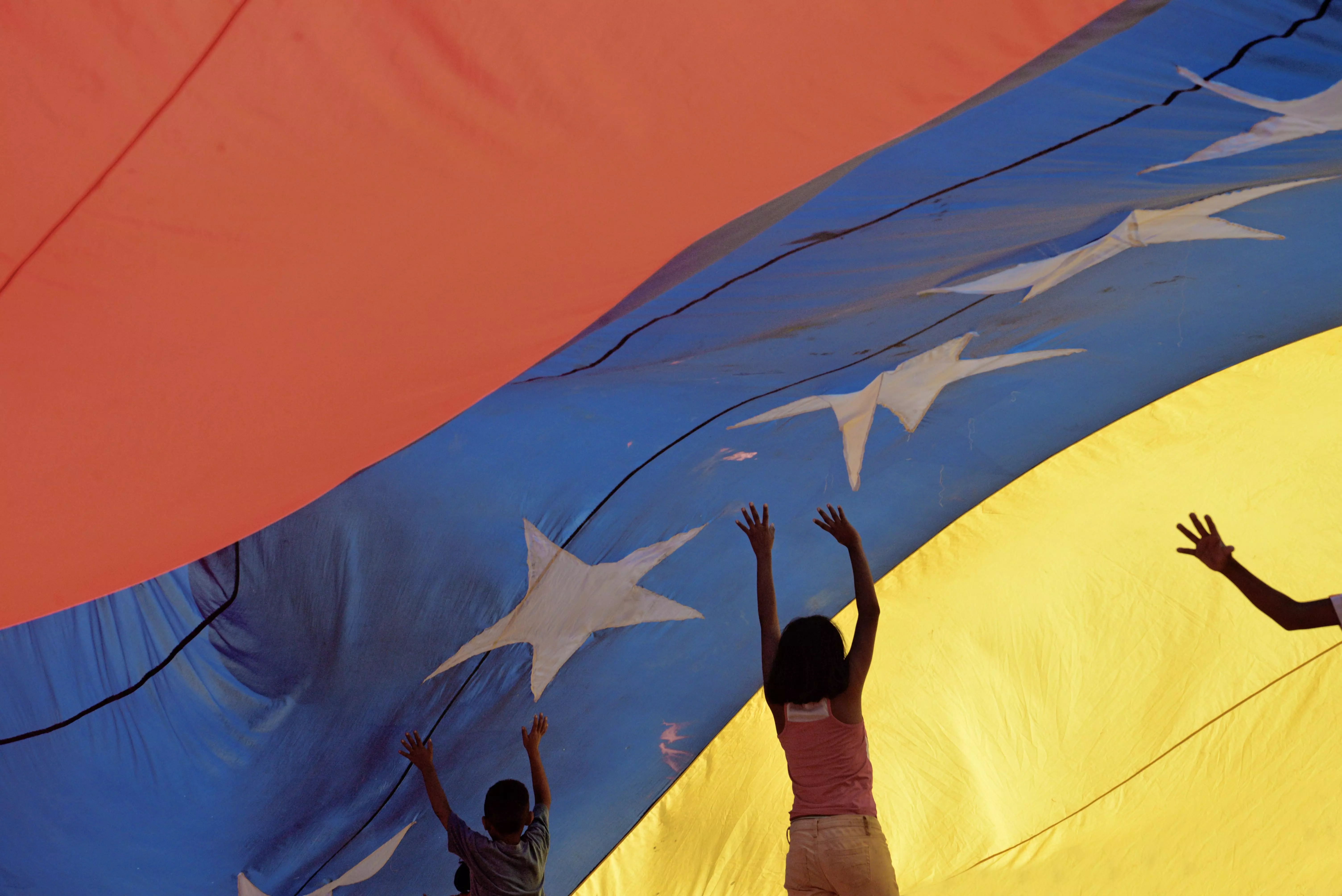
People's Korea and the Juche idea are incessantly demonised. The propaganda against People's Korea is on an industrial scale, is pervasive and permeates everywhere, even the left. The Juche idea is not only attacked by the right and the mainstream media, but over the years some on the left have likewise attacked or criticised Juche, raising various objections such as 'it rejects Marxism-Leninism', to give one common example. It needs to be pointed out that the left in the imperialist countries has yet to lead a successful revolution and achieve state power, so - to put it mildly - they need to be a lot less dismissive of People's Korea, its experience and its ideology. In the past some of the left worshipped the former USSR. Today some leftists worship China (which has introduced ‘reform’ and is opening up) and also the non-socialist Russian Federation. They are enthusiastic about Cuba and Venezuela, sometimes Syria, but when it comes to People's Korea, they have a grudging attitude. They will pick up a book from the DPRK, flick it open and say 'Oh, they cannot say that', 'this is not Marxism-Leninism', etc, etc.
This leads to the question: then what is Juche? How does it relate to Marxism-Leninism? To understand People’s Korea, you need to understand Juche, which is the guiding ideology of the country and has been for many decades.
Juche is a Korean word of two syllables: ‘Ju’ meaning ‘master’, and ‘che’ means ‘one’s self’, so put simply, it means ‘master of oneself’. Basically, the Juche idea is the idea that the people are the masters of the revolution and its construction.
It stipulates that humans are the masters of their own destiny and have the power to carve it. Juche, therefore, rejects all kinds of superstitious and fatalistic notions about the fate of humans being either predetermined or controlled by some unseen deity existing outside time and space. So essentially, it is rooted in the materialist outlook rather than the idealistic outlook.
The Juche idea was authored by the great leader of the Korean people, President Kim Il Sung, who first outlined it at the historic Kalun meeting of young Korean revolutionaries in June 1930. In December 1955 he made the famous speech “On eliminating dogmatism and formalism and establishing Juche in ideological work” to the Workers Party of Korea.
The Juche idea was systematised and further developed by Chairman Kim Jong Il, who wrote the classic treatise “On the Juche idea” in March 1982. Juche defines humans as social beings with independence, creativity and consciousness. These attributes are not inborn but are acquired socially, through interaction in society. Juche stresses that the most important thing is to develop the independence and creativity of people during all stages of the revolution and its construction. The key thing is to take an independent stand in the revolution: this means establishing Juche in ideology, independence in politics, self-sufficiency in the economy, and self-reliance in national defence.
Juche is not simply Marxism-Leninism applied to Korea as some claim. It contains original features but at the same time inherits features of classical Marxism-Leninism. It is not a rejection or abandonment of Marxism-Leninism, as others claim. Indeed, Comrade Kim Jong Il said: "Our Party and our people respect Marx, Engels, Lenin and Stalin as the leaders of the working class and speak highly of their distinguished service.” Moreover, People's Korea is one of the few countries in the world where you can take a university course in Marxism-Leninism and dialectical materialism.
However, Juche stresses the subjective or human factor in the revolution and building of socialism, whereas classical Marxism-Leninism stresses material-economic factors.
When building people’s democracy and socialism after liberation, Korean comrades found that many questions were not covered by classical Marxist-Leninist textbooks. Moreover, Korea was a small and divided country. What worked in big countries like the Soviet Union and China might not necessarily work in a small country. Also, throughout Korean history there had been a negative tendency (described as flunkeyism) to look up to big countries and copy them; this tendency had been present among the feudal ruling class, among bourgeois nationalists and within the factionalists who falsely styled themselves as ‘communists’. In order to build socialism, Korea needed to put this tendency in the bin and go its own way.
In People's Korea socialism had to be built through struggles not only against imperialism and class enemies but also against hidden internal enemies: dogmatists and factionalists. The struggle was quite severe. Dogmatists would argue against different policies of the Workers Party of Korea, saying either that such and such policy was not classical Marxism-Leninism or that it had not been done in a big country. For example, after the Korean War (Fatherland Liberation War) the DPRK embarked on agricultural collectivisation, or co-operativisation, as it is known in the DPRK. It was a vital public demand, as farms and rural areas had been devastated during the war and there was a need to pool resources. However, dogmatists in the Party opposed co-operativisation on the grounds that the textbooks of classical Marxism-Leninism stipulated that the mechanisation of agriculture needed to be completed first. They also opposed more generally the building of socialism in the DPRK on the grounds that the country had to be reunified first. Both these arguments were actually reactionary and counter-revolutionary but were presented in the colours of pure ‘Marxism-Leninism’. Adhering to Juche principles, the DPRK pushed ahead with agricultural co-operativisation at a fast pace, completing it by 1958, basically carrying it out over five years, much faster than other socialist countries (and in fact some socialist countries never fully completed collectivisation, or even abandoned it).
President Kim Il Sung stressed that the struggle to establish Juche was closely bound up with the struggle against modern revisionism which had appeared in the international communist movement in the 1950s, as well the struggle for independence not only from imperialism but from the big-power chauvinism that existed in the socialist camp. As he later pointed out: “In 1955, therefore, our Party set forth the definite policy of establishing Juche, and it has been persistently urging an energetic ideological struggle to carry it through ever since. The year 1955 marked a turning point in our Party's consistent struggle against dogmatism. It was also at that time, in fact, that we started our struggle against the modern revisionism that had emerged within the socialist camp. Our struggle against dogmatism was thus linked up with the struggle against modern revisionism.”
The Soviet big-power chauvinists and modern revisionists put pressure on the DPRK to join the “Council for Mutual Economic Assistance” (CMEA) or COMECON. The big-power chauvinists wanted to subordinate the DPRK’s economy to their own. The pressure was immense and included cutting off military and economic aid to the DPRK in 1962. The DPRK, sticking to Juche, rejected this and instead put forward the line of building an independent national economy. President Kim Il Sung gave the following definition of the line of building an independent national economy: “building an independent national economy means building a diversified economy, equipping it with up-to date technology and creating our solid bases of raw materials, thereby building up an all-embracing economic system in which every branch is structurally interrelated so as to provide domestically most of the products of heavy and light industry and the agricultural produce needed to make the country wealthy and powerful and to improve the people's living condition”.
The line of building an independent national economy was a concrete application of Juche to questions of practical policy. The DPRK’s line of building an independent national economy was proved correct when the countries of the CMEA abandoned socialism and collapsed. Had the DPRK followed the diktats of the big-power chauvinists and joined CMEA, it would have collapsed along with the other socialist countries. What’s more, the DPRK’s independent national economy has enabled it to withstand sanctions by the UN and US.
Another application of Juche has been self-reliance in national defence. The Cuban missile crisis of 1962 showed that a small country cannot rely on a big country to defend it. At the end of 1962 the line of building the economy and defence in tandem was put forward. Later, Marshal Kim Jong Un put forward the line of Pyongjin, which meant developing the economy and nuclear force in parallel.
Some dismiss Juche as ‘nationalist’. However, it is internationalist, as it combines the national and international duties of the working class. In fact, the DPRK has given generous assistance to other countries. It has supported revolutionary and anti-imperialist struggles in many countries, such as Vietnam, Cuba, Angola and others. The pilots of the Korean People’s Army helped defend the skies of Vietnam and Egypt. Several African countries have monuments built by DPRK for them, and in Egypt and Syria there are war museums built by the DPRK.
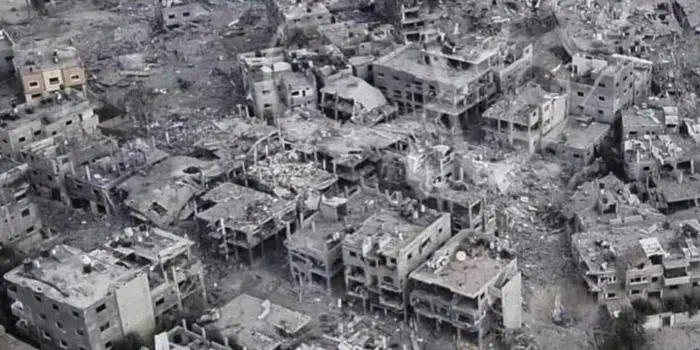
Guided by the Juche idea, People's Korea has made great achievements in building socialism, including rapidly recovering from the immense war damage caused by the US imperialists. The DPRK was able to industrialize rapidly and grant people huge benefits such as free education, free health care, full employment and the abolition of taxation. The DPRK became a nuclear power and a missile power.
Because of its correctness and vitality, the Juche idea has had a great impact beyond the borders of the DPRK; more than a thousand Juche Idea Study Groups exist in the world, the first being formed in Mali in 1969.
It is time for socialists and communists in Western countries to undertake a deep and serious study of the Juche idea.