Keiko Fujimori was clearly inspired. In April this year, as news came in of teacher-union activist Pedro Castillo’s possible victory in the Peruvian general elections, Fujimori (daughter to former strongman-president Alberto Fujimori) cried foul over the alleged ‘fraud’ and assured her followers of a flipped outcome. Massive rallies were planned to secure the latter. Without an iota of proof vindicating her claims against the popular mandate, she seems to have taken a leaf directly from the antics of former President of the United States Donald Trump. January 2021 saw the billionaire incite a motley mob of thousands to storm the Capitol, all to overturn the electoral results and ‘Stop the count!’. Right-wing ruses vis-à-vis liberal democracy can be identified as the only constant product the ‘Free Trade Areas’ of the Americas deal in.
Nevertheless, it is remissive to interpret/react to recent right-wing mobilizations with absurd-ist disbelief (as opposed to surreal works of literature, which suspend disbelief to absurd lengths, politics of the two Americas seem to proliferate unbelievable absurdities). As Trumpian misadventures end in infamy and events unfold to further consolidate the myth of the punitive, enlightened majority, these episodes are increasingly read as absurd blips. In other words, the ‘fringe’ status pinned to these forces betrays a deliberate effort to deny the inroads they have made into the “mainstream”. To make sense, what we can do at this point is to perhaps focus on their evolving reactions and responses to ‘left-wing’, socialist or even egalitarian, nationalist regimes and movements across the hemisphere. And what better example to demonstrate this than the socialist Republic of Cuba.
Over the past few weeks, this small island nation has come up frequently in news and discussions on international politics. The occasion being protests against the government’s management of the domestic economy, especially in regard to the coronavirus pandemic. This is in stark contrast to the shroud of media silence that prevents us from learning about the developments of the region. Take for instance coverage on Cuba by The Guardian; since the second week of July daily reports address almost every aspect of the ‘popular uprising’, as opposed to the one-article-a-month policy followed earlier. Uprisings and unrests are moments of ‘encounter with power’, as Michel Foucault put it, and indeed they deserve our special attention, but not at the cost of the devil concealed in the mundane details. Let us start with what is lacking in most ‘crisis’ reporting, a retrospective eye.
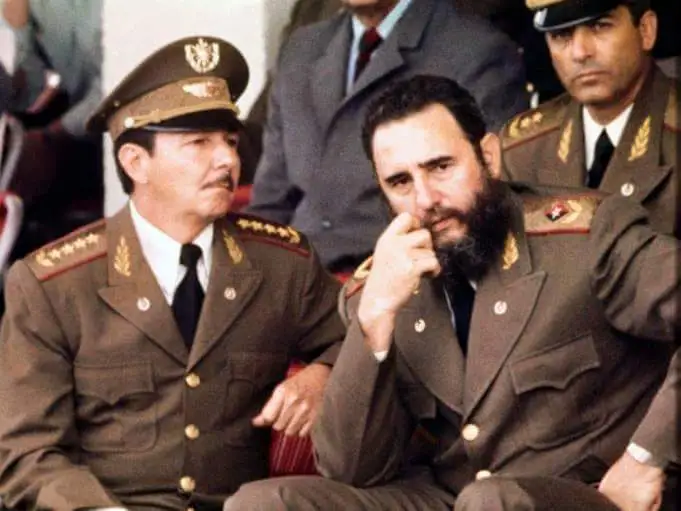
In the early hours of New Year Day, 1959, Cuban dictator Fulgencio Batista fled the island, running from the victorious forces of the 26th July movement. Apart from the $300 million in personal effects, his flight carried on board the principles of plantation economics that kept the island’s production specialised for cheap agricultural export, controlled by the powerful few and generating scarce income for the majority employed on these massive farms. Eventually, the ideological affiliations of the revolutionaries and imperatives of Cold War geopolitics (Cuba being the only official socialist state in the American Hemisphere) brought the new government, led by Fidel Castro, closer to the erstwhile Soviet Bloc. This also marks the rolling of the sanctions regime against Cuba by the United States and subsequently its allies. Land reforms, massive infrastructure investments and widening social security nets marked the three decades of Cuban reconstruction, with substantial aid from the Soviet camp. When the USSR fell in 1991, mainstream analysts were too sure of the Cuban wagon crash, given its attachment to the Soviet star. Indeed, the economy was badly hit, with exports, supplies of energy and technology, income and output plummeting at unprecedented rates. Today’s protests have their earliest post-Cold War avatar in the “Special Period” protests of 1994, when food and fuel scarcity made life difficult. Despite extraordinary challenges, the government rolled out what Helen Yaffe called “humanistic austerity”. True to the legacy of many firsts, Cuba’s austerity became the epitome of progressive government cutbacks, whereby public spending was diverted from the military and similar sectors (a whopping cut by 86%) to maintain subsidy flow into health, education and other social sectors. Entire ministries were dissolved to maintain, for instance, a high doctor-to-patient ratio (highest in the world now) found the biotech industry. Mortality rates and other indicators of quality of life reflected this effort. Three decades from the “Special” moment, ripe with possibilities of socialist collapse in Cuba, the West finds itself at a familiar crossroad. Or is it so?
Cuba has picked up several valuable lessons from that era. It has internationalised the ‘humanistic austerity’ principle in ways more than one. Even amidst crippling economic hardships (since the Covid lockdown) and natural calamities like Hurricane Elsa, it dispatched thousands of medical professionals and support staffs to nations across the globe. Italy, one of the prime initiators of European Union sanctions against Cuba (2003), has been one of the benefactors of Cuban medical assistance. To put this into the international perspective, these initiatives came at a time when the largest economy on the planet (USA) developed cold feet vis-a-vis its annual commitments to the World Health Organization. Additionally, under the Trump administration, it tightened the sanctions noose around Cuba and its biggest trade partner in the region (especially when it comes to oil); all of these in direct violation of the United Nations’ call for humanitarian suspension of hostilities. Even research equipment for the island’s fledgling vaccination development programme wasn’t spared. If legitimacy was the ground on which the US wants to proselytize Cubans to a liberal democratic order, it is running dangerously low on the principle itself. What it aspires however is to watch Latin American regimes embrace the Damoclean sword of “aid”. Venezuela has already steered clear of right-wing aid politics, which aim to force aid down a struggling nation’s economy, even as it remains uncritical of sanctions that started this meltdown in the first place. What Cuba strives for instead is international cooperation, like the one it shares with China for biotech research.
Internal legitimacy is another popular ground of criticism. It is worth noting however that when the government proposed constitutional amendments in 2018, millions of Cubans voiced their opinion during their drafting, with proper recommendations. Even if this does not translate to unequivocal support for the Communist regime, it is evident that people are more invested in the decision-making process than ever. Economic crises like the one right now may also be understood in regard to the social security nets in force. South European nations stand testimony to the fact that economic prosperity is a fleeting guarantor of life, especially when it hangs between the pangs of a global pandemic and privatised healthcare.
There is no denying that problems and contradictions abound. The international solidarity gestures, although generating income, hits a wall often when it comes to foreign policy reciprocation. On the domestic front, the challenge is more complex, the stakes bigger. Ever since Jose Marti, the idea of an unfinished revolution looms large over Cuban politics. Setting aside the obvious right-wing involvement, the general unrest can be imagined as arising from genuine imperfections in governance. This is a distinction that escapes right-wing imagination and in an ideal situation, should occupy its socialist counterpart. A graduate degree, a plot of land ensuring minimum income, community kitchens and day care are seeds of a revolution whose fruits can hardly be reduced to authority at Havana. The stakes are high even for Cuba’s socialist sympathisers in the continent, many of whom are threatened by sanctions themselves. Innovations and progressive imaginations preserved the fruits of revolution in 1994. The call to “Protect the Revolution” stands witness to continued commitment to this position. In a geopolitical reality stacked up against its well-being, Cuba’s prospects rely on another stride towards “finishing” the revolution and its imagination: after all Cuba’s national hero was a poet.
(Titas Ganguly is a Masters student at the John F. Kennedy Institute for North American Studies, Free University Berlin.)