War has been waged for a number of reasons throughout history. But in the guise of promoting a “just” war liberal democracy and liberal ideals – “liberty”, “freedom”, “equality” – have been used as an agent for imperialism. Take the British Empire as an example, which continuously used the premise of a “civilising mission” to introduce foreign peoples to “civilisation” and the “enlightenment”, as cover for the pillaging, rape, exploitation, enslavement, and mass murder of others. The infamous historian James Mill – father to prominent liberal thinker John Stuart Mill – is case in point. Mill wrote The History of British India (1817) – but never visited the Indian subcontinent nor spoke the various languages of the region – that largely formed the consensus and ideological underpinnings for Britain’s “civilising mission” in India. And Mill’s work would later be a cornerstone for other historians to base their work upon, perpetuating the concept of the “civilising” nature of empire.
The notion of a “civilising mission” has been continued and carried out by other formidable imperial powers – namely the United States. Currently this concept involves introducing nations to “liberal democracy”, which includes a number of elements – such as a market driven economy – that benefit the leading imperial power and allows them to enter either a neo-colonial relationship or, as seen in Afghanistan until the withdrawal, a full scale occupational-colonial relationship.
All of which is nothing more than a continuation of liberalisms belligerence – as seen by the British Empire and occupation of Native Americans land, due to them allegedly, according to liberal thinker John Locke, not working the land “productively” and in accordance to liberal philosophy meaning the land was no longer theirs but rather the “productive” and liberal forces (i.e., white Europeans).
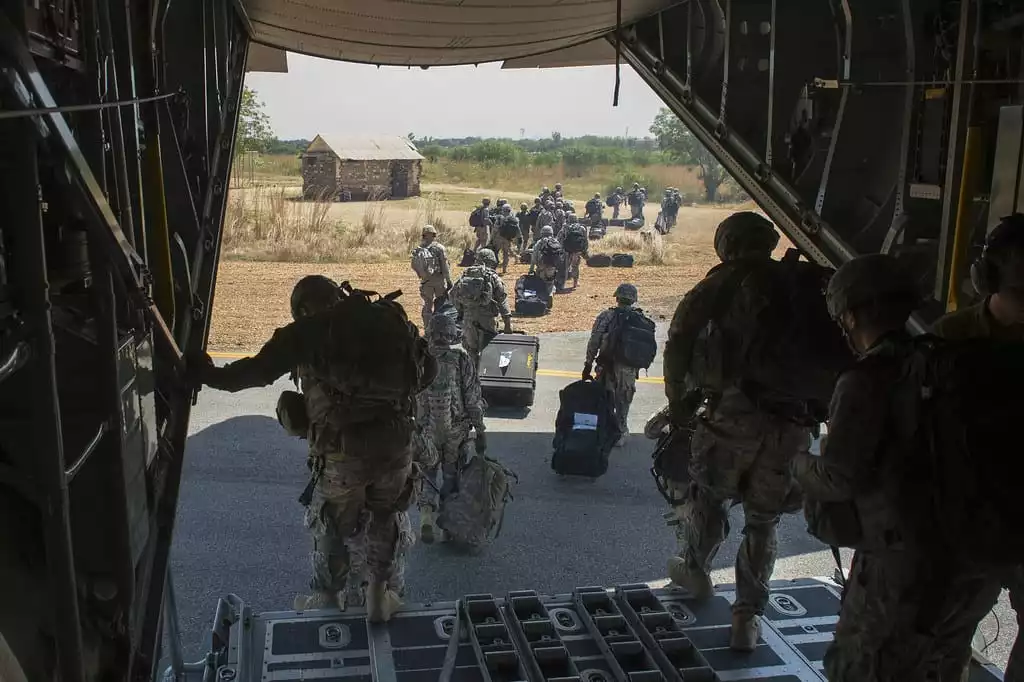
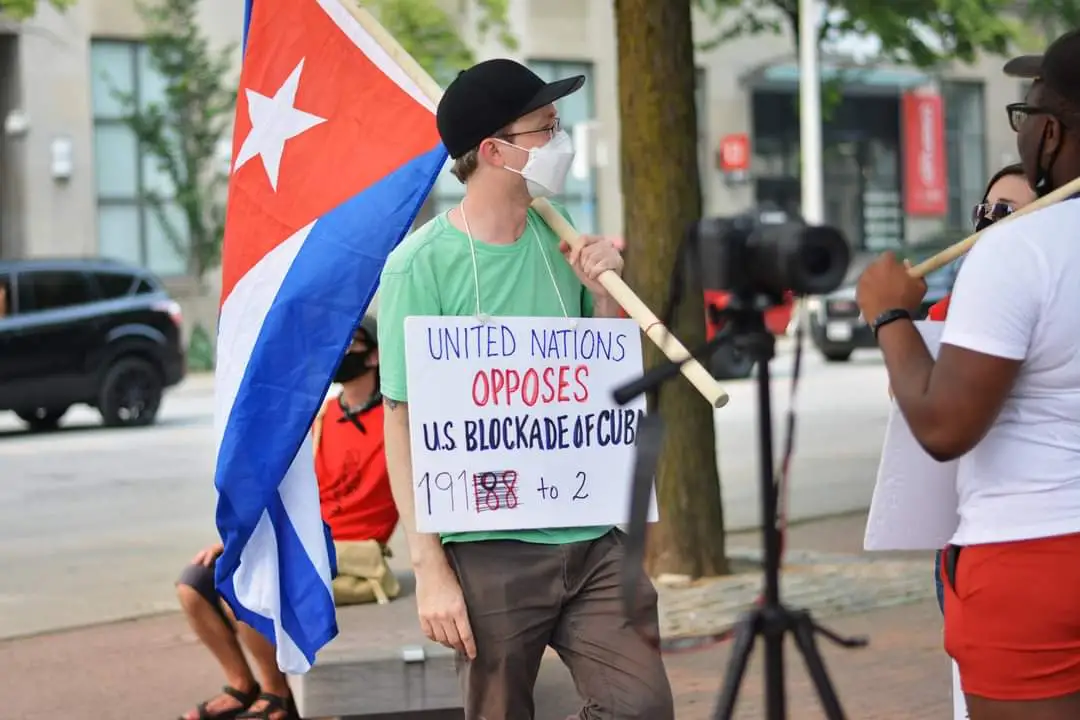
The United States, being the pre-eminent imperial power, subscribes to the notion of liberalism being the apogee of ideological evolution and capitalism being the ultimate mode of economic production. As seen by the sheer determination to propagate the concepts developed by political thinkers like Francis Fukuyama within academia, whose “End of History” moment is promoted with capitalism revered as the unrivalled economic system and liberalism dubbed the optimal ideology, and that peace will ensue because of it. This also bares semblance to IR concepts, like the “Democratic Peace Theory”, which determines that if all states were liberal democracies there would be world peace. However, there are numerous issues with this theory. As who determines who is and who is not a “liberal democracy”? Because we have seen states, particularly world hegemons like the US, continuously reinterpret who is viewed to be a “liberal democracy” and who is not according to the current political and economic environment. That also often sees so-called “liberal democracies”, like Washington, wage myriad modes of warfare against so-called “illiberal” states like Cuba, Venezuela, or Bolivia. Collapse of US hegemony in these states were followed. This is why it’s important to remember that “democracy does not come in one flavour”, as Barbadian Prime Minister Mia Mottley recently stated. And is also why, as Michael W. Doyle states, liberalism has a tendency of embracing imperialism. Seeing “liberal” states being highly war prone to “illiberal” states and sees “liberal democracy” becoming a means of manufacturing a “just” war. As seen by the continuous use of liberal rhetoric in war campaigns, such as by former President George W. Bush in 2009 discussing Iraq, “the issue [the Iraq War] is not only peace, the issue is freedom and liberty”, and by rise of “humanitarian interventionism” – where exceptionalist phrases are used throughout.

It is not uncommon, as noted, for imperialist forces to make use of ideology and the tenets that come along with them for the advancement of imperial ambitions. Most recently, Wiki Leaks, released documentation that highlighted just this. The CIA in 2010 following opposition to military occupation in Afghanistan sought to use feminism as a tool to dampen and reduce Western opposition to the war, highlighting the plight of women in Afghanistan and how US occupation is actually beneficial for the war-torn nation. Imperialist agencies, like the CIA, have engaged in a countless number of schemes to utilise ideologies for the pursuit of foreign policy aims. The founding and financing of the Congress for Cultural Freedom, that waged a cultural war on the Soviet Union, promoted liberalism, and sought to counter post-war sympathies with the USSR through cultural mediums, is case in point.
“Liberal democracy” and the apparent ideals proscribed to it – “freedom”, “equality”, and “liberty” – has been and continues to be used as a weapon of war. Theoretical constructions like the “Democratic Peace Theory” serves the agents of imperialism which are then disingenuously promoted within universities as a concept that seeks the betterment of the world rather than providing ideological cover to imperialism. The aforementioned nations of Cuba, Venezuela, and Bolivia – as well as other states which are in a similar predicament – are referred to in the corporate press and by imperialist governments as “authoritarian” “dictatorship”, even “totalitarian” in some cases, and the urgent need to bring “democracy” them which means nothing more than removing and subduing real democracy and installing a government favourable to Washington and a capitalist class. These are the nations that no longer wish, nor do their people, to kiss the boots of Washington and want to determine their own trajectory, and rightly so. “Liberal democracy” is a weapon that has cost the lives of millions and caused the enslavement of many to a system which benefits a few. Do not be misled by its grandeur. Its nothing more than a wolf in sheep’s clothing.