Critics of U.S. interference in Latin America and the Caribbean may soon realize, if such is not the case now, that Peru has a compelling claim for their attention. The massive popular resistance emerging now amid the political crisis looks to be sustainable into the future. Meanwhile, a reactionary political class obstinately defends its privileges, and the U.S. government is aroused.
This new mobilization of Peru’s long-oppressed majority population manifested initially as the force behind left-leaning presidential candidate Pedro Castillo’s surprise second-round election victory on June 6, 2021. It exploded again following the coup that removed Castillo on Dec. 7, 2022.
The politically inexperienced Castillo, a primary school teacher and teachers’ union leader in rural northern Peru, espoused a program of resisting both Peru’s corrupt and oligarchical elite and foreign exploiters. Castillo had begun his 2020 presidential campaign prior to aligning with a political party. His affiliation eventually would the Marxist-oriented Peru Libre (Free Peru) Party, which abandoned him during his presidency.
Castillo was the first leftist to be elected president of Peru. The candidate he defeated was Keiko Fujimori, standard-bearer of Peru’s oligarchs and militarists and daughter of dictator and former President Alberto Fujimori.
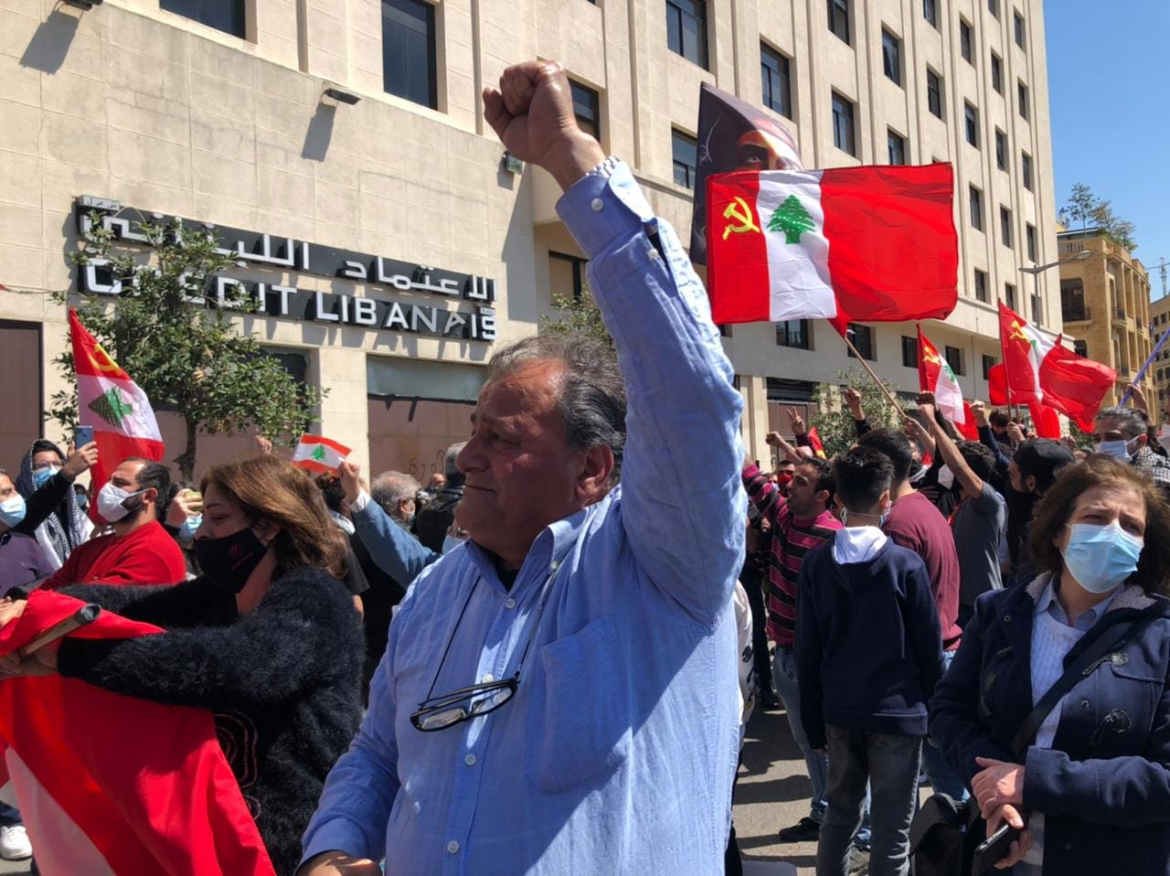
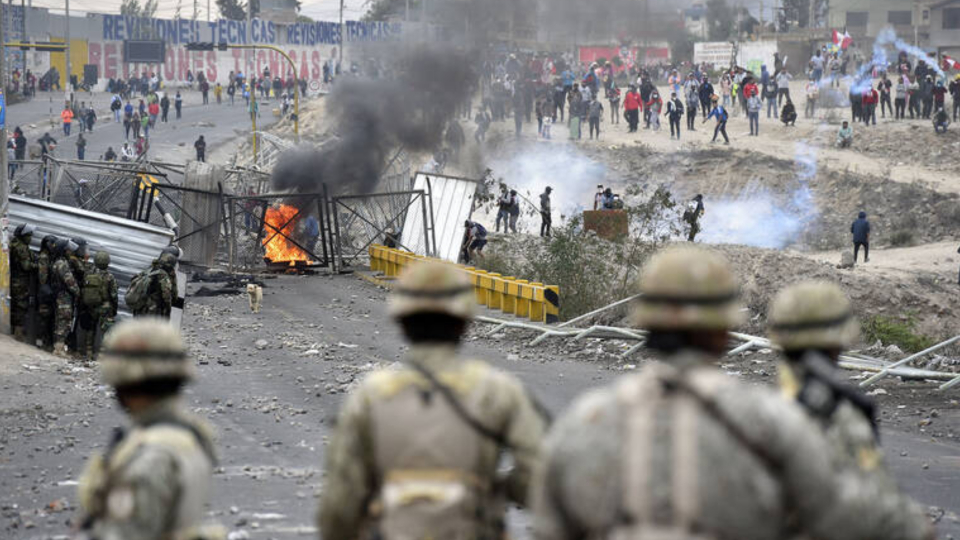
Castillo’s forced removal from office prompted massive popular resistance. Since then, small farmers, indigenous communities, social organizations, students, and labor unions have sustained a national strike. Concentrated in Peru’s southern provinces at first, and later spreading throughout northern regions, strikers have been blocking highways, city streets, and access to government offices and airports.
In their “March from the Four Corners” of Peru, protesters on Jan. 19 occupied Lima in what they called the “Taking of Lima.” They have filled streets and plazas, marched, and impeded access to government offices. They say they will stay. Lima residents and social movements have stocked food for them and, with the help of schools and universities, provided shelter.
Anthropologist Elmer Torrejón Pizarro, from Amazonian Peru, was marching on Jan. 19. He writes: “I saw no criminals next to me, much less terrorists. I observed young university students and mostly peasants, women and men from the south. I saw their faces, furrowed by the pain of life and death. They were next to me, their faces hard and burned by blows from life, from Peru. They were faces expressing generational hibernation of a country that, as a state, has failed.”
The protesters are demanding:
They want new elections in 2023 and a popular referendum on instituting a Constituent Assembly. They, like Castillo, want a new constitution.
Left-oriented news sources haven’t reported reactions to the strike from Peru’s leftist political parties. The few websites of those parties that are accessible add little. The Communist Party of Peru Patria Roja, an exception, on Jan. 16 condemned the coup government as a dictatorship, called for a transitional government, and expressed support for the demands outlined above.
Popular resistance is one aspect of this crisis situation. The other is political repression. For weeks, the police and the military have been assaulting protesters throughout the country with lethal force. They have killed over 60 of them, wounded hundreds, and jailed hundreds more.

In Lima on Jan. 21, almost 12,000 police were in the streets blocking demonstrations and harassing residents and students; 14,000 more were otherwise engaged. The police that day violated a university autonomy law and entered San Marcos University where they arrested strikers sheltering there and students, over 200 in all.
The security forces and their handlers are heirs to repressors who, from Spanish colonization on, have repeatedly victimized masses of impoverished, mostly indigenous Peruvians. Peru experienced three prolonged military dictatorships during the 20th century.
In dealing with Castillo and the threat he represented, forces of reaction turned to softer methods. These centered on congressional maneuvering aimed at harassing Castillo’s ministers and blocking his government’s program.
Finally, the Congress demanded that Castillo resign, and immediately soldiers seized the president. He was charged with “rebellion and conspiracy” and will remain in prison for at least 18 months. He is held incommunicado.
When interviewed, Wilfredo Robles Rivera, the deposed president’s lawyer, spoke of a “parliamentary coup, a slow coup, a prolonged one organized on several fronts.” He explains that “It was a strategy that began even before President Castillo took office. The right wing … was pressuring election officials to recognize electoral fraud. An electoral coup, therefore. The true parliamentary coup began when Castillo became president.”
An earlier article by the present author elaborates on this terminal phase of Castillo’s downfall. Robles Rivera’s perspective appears in one of the addenda below.
Lastly, there is that aspect of Peru’s mounting crisis that relates to North Americans: U.S. intervention is possible.
Gen. Laura Richardson, head of the U.S. Southern Command, spoke to the establishment-oriented Atlantic Council on Jan. 19. In regard to Latin America, she mentioned “rare earth elements,” “the lithium triangle—Argentina, Bolivia, Chile,” the “largest oil reserves [and] light, sweet crude discovered off Guyana,” Venezuela’s “oil, copper, gold” and “31% of the world’s fresh water in this region.” She concludes, crucially: “This region matters. It has a lot to do with national security. And we need to step up our game.”
On Jan. 18, de facto President Dina Boluarte and her Council of Ministers informed Peru’s Congress that they were submitting for approval a draft legislative resolution saying, in effect, that Congress would be “authorizing the entry of naval units and foreign military personnel with weapons of war” into Peru.
Who but U.S. troops and military machinery would be first in line? The U.S. military is already familiar with deploying in Peru. And the day prior to Castillo’s removal from office, U.S. ambassador Lisa Kenna, a CIA veteran, was in the office of Peru’s defense minister, conferring.
She is persistent. On Jan. 18, Kenna conferred with Peru’s minister of energy and mining and his associates. Journalist Ben Norton attests to that minister tweeting about “a high-level institutional dialogue that day between Peru and the United States.” The minister expressed pleasure at “support from the North American government in mining-energy issues” and mentioned his government’s prioritization of the natural gas and energy sectors.
Presently all liquified natural gas produced in Peru goes to Europe. Energy supplies there are precarious due to U.S. anti-Russian sanctions. We imagine U.S. applause.
Originally posted in Peoples World
If you are a socialist, We need you now!✕
We are proudly biased towards Anti Capitalist, Anti Imperialist, Anti fascist! We believe we don’t need to mention you the importance of marxist magazine in this era! We are depending on our comrades only! Make an investment of $2.5/m in making a quality journal inclined to Marxism Leninism! Your one potential subscription helps us to maintain our global team! Subscribe and get access of all exclusive content available at the magazine section!